Rapid Crisis Response
AI emergency coordination for hospitality venues, from panic button to staff brief.
Top 100 — Google Solution Challenge 2026
- Design and engineering
- 2026
- Hackathon prototype
- Google Gemini
- FastAPI
- React
- Firestore
- Socket.IO
- Vertex AI
- Firebase Cloud Messaging
- Arduino
< 3 s
Button press to staff brief
4
Alert types
90 s
Escalation window
30 days
Risk history analysed
Problem
In most hotels an emergency starts with a walkie-talkie. Someone hits a panic button, someone else radios a room number, and the right people with the right skills may or may not be listening. The minutes lost in that hand-off are the ones that matter.
Approach
Treat the alert as the start of a plan, not just a notification. When an alert arrives, Gemini reads the incident and writes a two-to-three sentence situation brief along with an action checklist tailored to the emergency type. Tasks are then assigned to staff who are available nearby, so every action has an owner before anyone reaches the scene. The target is under three seconds from button press to a briefed team.
If nobody acknowledges within 90 seconds, Gemini writes an escalation message and the duty manager is alerted automatically. Each resolved incident feeds an analytics pass in Vertex AI that surfaces hotspots and peak-risk times from the last 30 days.
Architecture
Incident lifecycle
- Alert triggered. A structured payload with type, room, device and timestamp goes to the backend.
- Incident logged. The alert is validated and stored in Firestore, so there is an auditable record from the first second.
- Gemini brief. A situation summary and a checklist of recommended actions, written for this incident rather than pulled from a template.
- Task allocation. Checklist items go to staff who are on duty and nearby.
- Staff notified. The dashboard updates over Socket.IO, so every open screen shows the same incident state.
- Acknowledge and resolve. Responders claim their task and move it from responding to resolved. Each change is broadcast live.
- Escalation. No acknowledgement in 90 seconds sends a context-aware message to the duty manager.
- Risk insights. Resolved incidents feed a 30-day pattern analysis.
Three ways to raise an alert
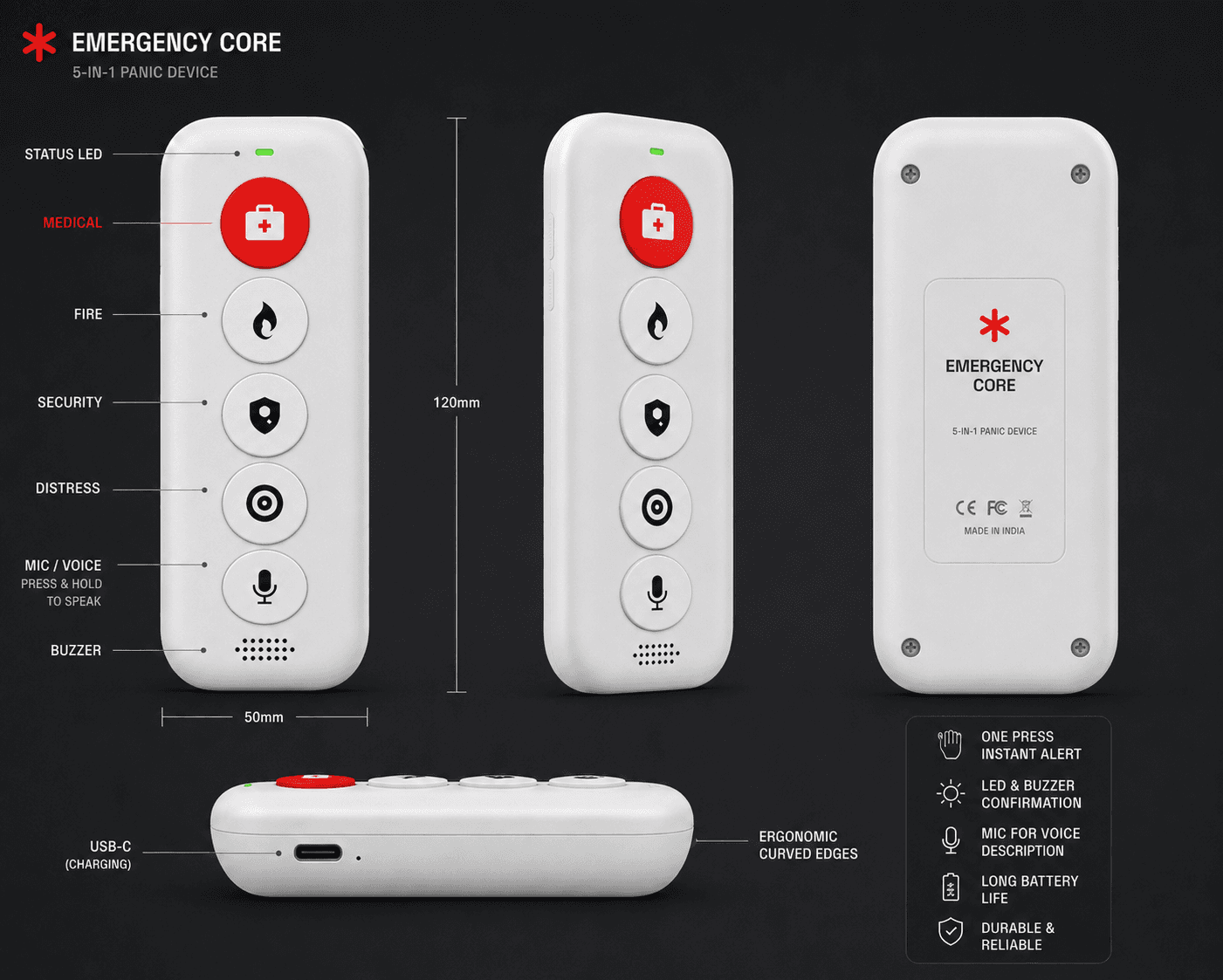
- A hardware panic device. A handheld panel with one button each for medical, fire, security and distress, a press-and-hold microphone for a voice description, and an LED and buzzer to confirm the alert went out. The design uses BLE and LoRaWAN so it keeps working without Wi-Fi. Firmware is in the repo.
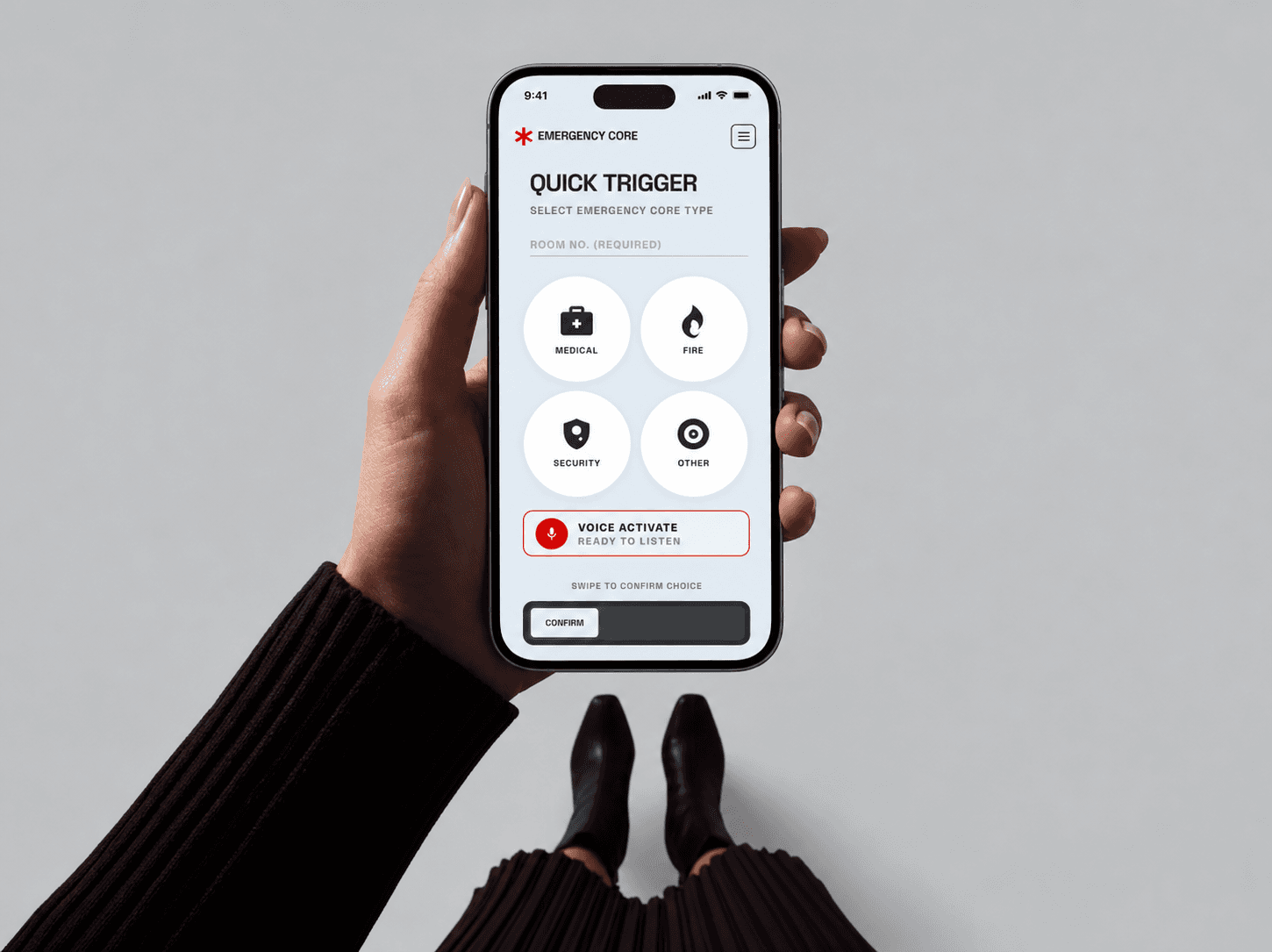
- A guest web trigger. A phone screen with the same four choices, a required room number, voice activation and a swipe to confirm, so an alert can't be sent by accident.
- The API.
POST /api/alerttakes the same payload, which is how the hardware and the web trigger both report in.
The operations dashboard
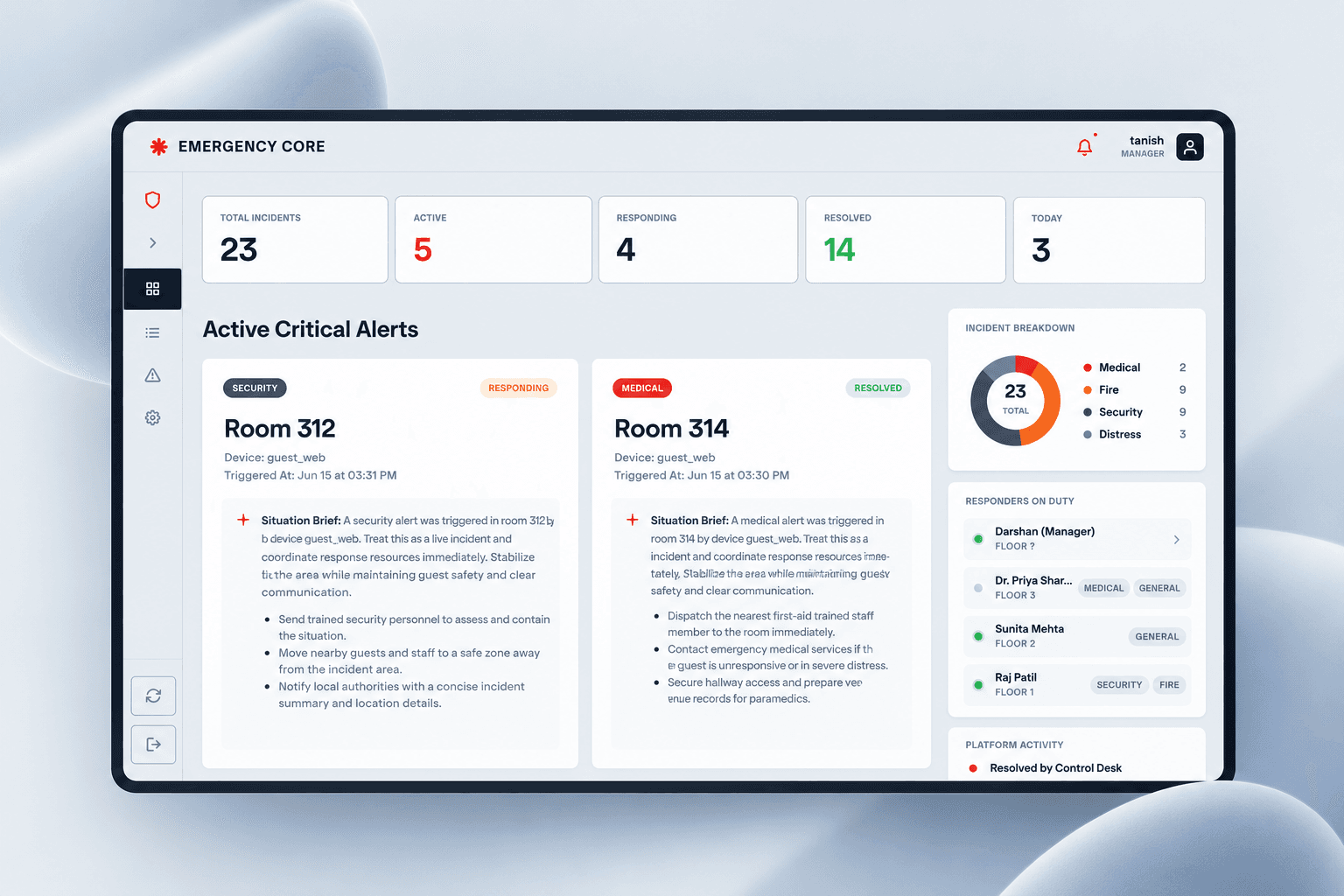
- Stats bar for total, active, responding and resolved incidents, plus today's count.
- Active critical alerts as colour-coded cards, each with its Gemini brief and checklist.
- Incident breakdown by type, and a list of responders on duty with their floor and skills.
- Incident log with timestamps, responder names and resolution notes.
- Risk insights tab for the 30-day analysis.
Outcome
Selected as a Top 100 project in the Google Solution Challenge 2026. Built as a team; this case study covers the coordination pipeline, the AI brief and the dashboard.