CredZen
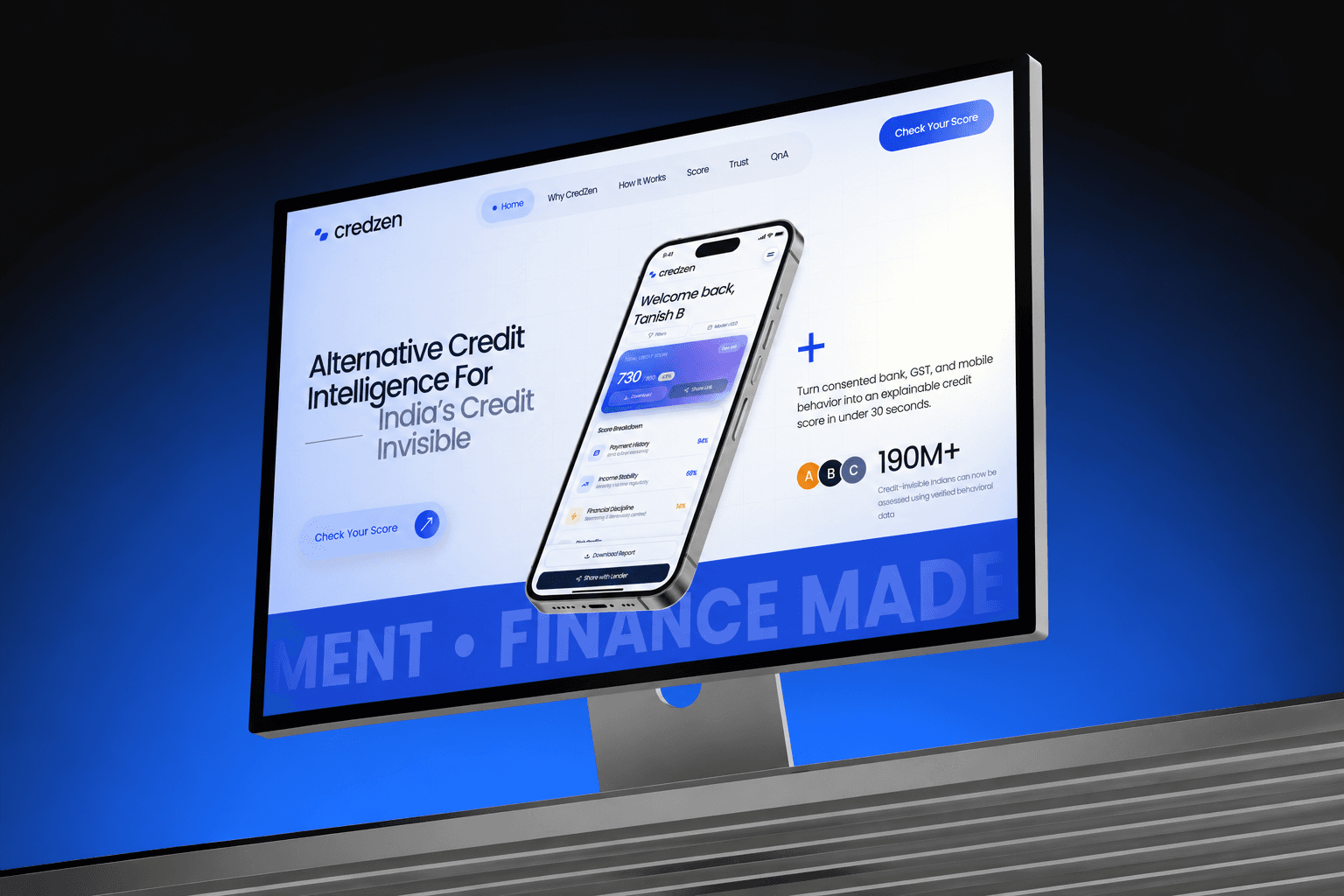
Explainable alternative credit scoring for credit-invisible people in India.
- Design and engineering
- 2026
- Live
- React
- Vite
- FastAPI
- scikit-learn
- SHAP
- pandas
300–850
Score range
~30 s
Time to a score
3
Consented data sources
Problem
Around 190 million people in India have no formal credit history, so lenders can't score them and they can't borrow. The gap isn't creditworthiness. It's data.
Approach
CredZen builds an alternative credit signal from financial behaviour the person agrees to share: bank activity through the Account Aggregator framework, GST filings and telecom payment history. It returns a score between 300 and 850 that explains itself, in about thirty seconds, so the person and the lender can both see why the number is what it is.
How a score is produced
- Sign in and consent. The applicant picks which data sources to share. Any source they decline is filled with neutral defaults rather than counted against them.
- Feature engineering. Raw monthly records become three derived signals: financial resilience, income stability and spending discipline.
- Scoring. A trained tree-based model predicts the probability of creditworthiness, which maps to the 300 to 850 range and a risk band.
- Explanation. SHAP values show which factors pushed the score up or down, with the strongest positives and negatives called out.
- Roadmap. The report ends with specific steps to improve, each with an estimated gain and timeframe.
What the applicant and the lender see
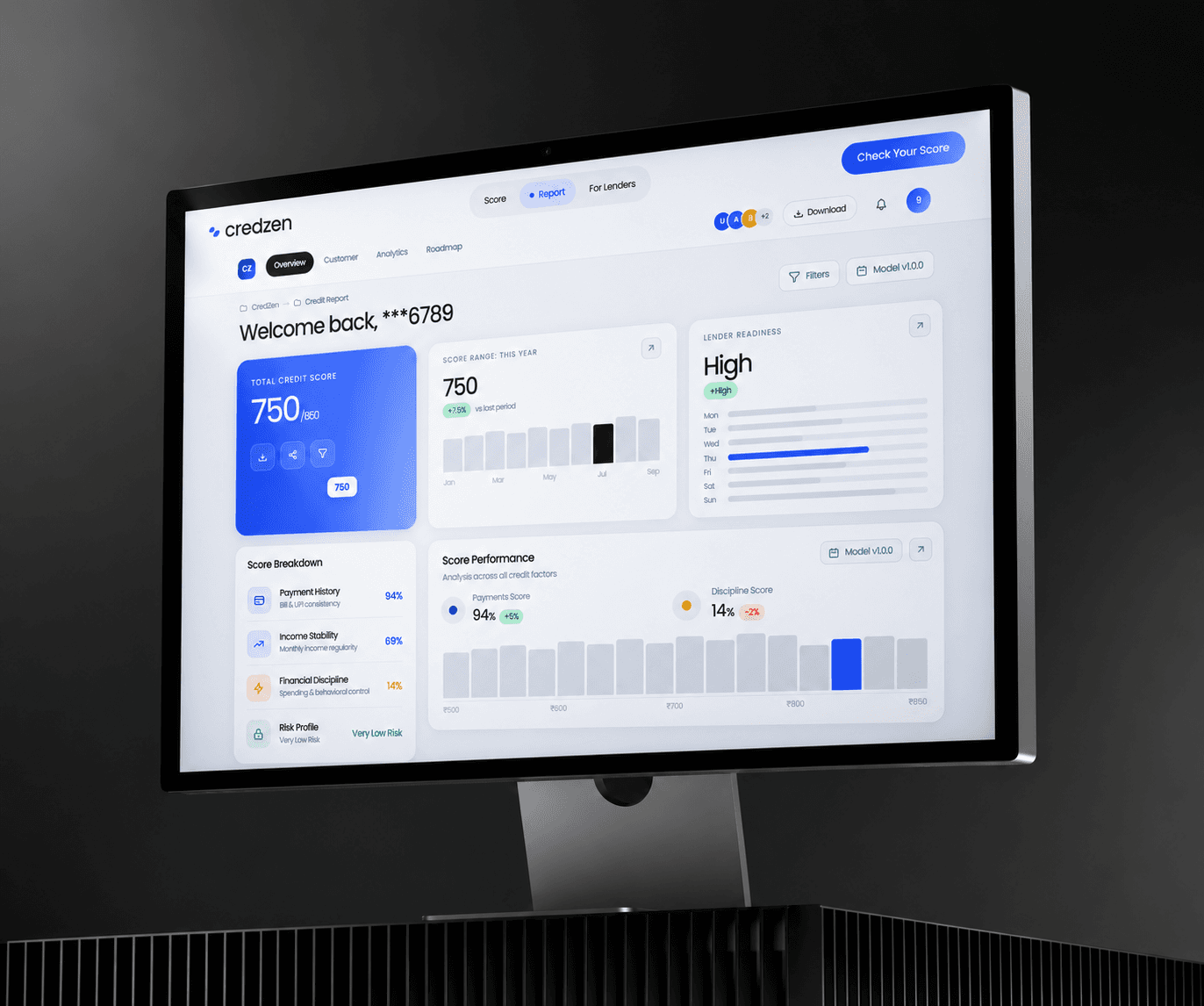
- Applicant report. The score dial, risk band, category scores for payments, income stability and discipline, a SHAP impact chart and the improvement roadmap. It can be downloaded or shared with a lender by link.
- Lender dashboard. The same report plus a lender-readiness rating and the applicant's percentile among peers.
Honest limits
This is a working prototype. The data connectors are simulated, the OTP step is a demo, and sessions live in memory for thirty minutes. The scoring pipeline, the model and the explanations are real; the next step is replacing the mock fetcher with live consented connectors.
Outcome
A working demo is live, and the model training code is open source.