MediQ
An AI health companion that takes a patient from scan to specialist.
- Design and engineering
- 2026
- In progress
- React
- TypeScript
- Vite
- Tailwind CSS
- shadcn/ui
- FastAPI
- MongoDB
- ONNX Runtime
- Pinecone
2
Screening models
3
Languages
Problem
Getting from "something looks wrong" to the right doctor takes too many separate steps: a scan in one place, a report in another, a referral on paper, and health records the patient never really holds.
Approach
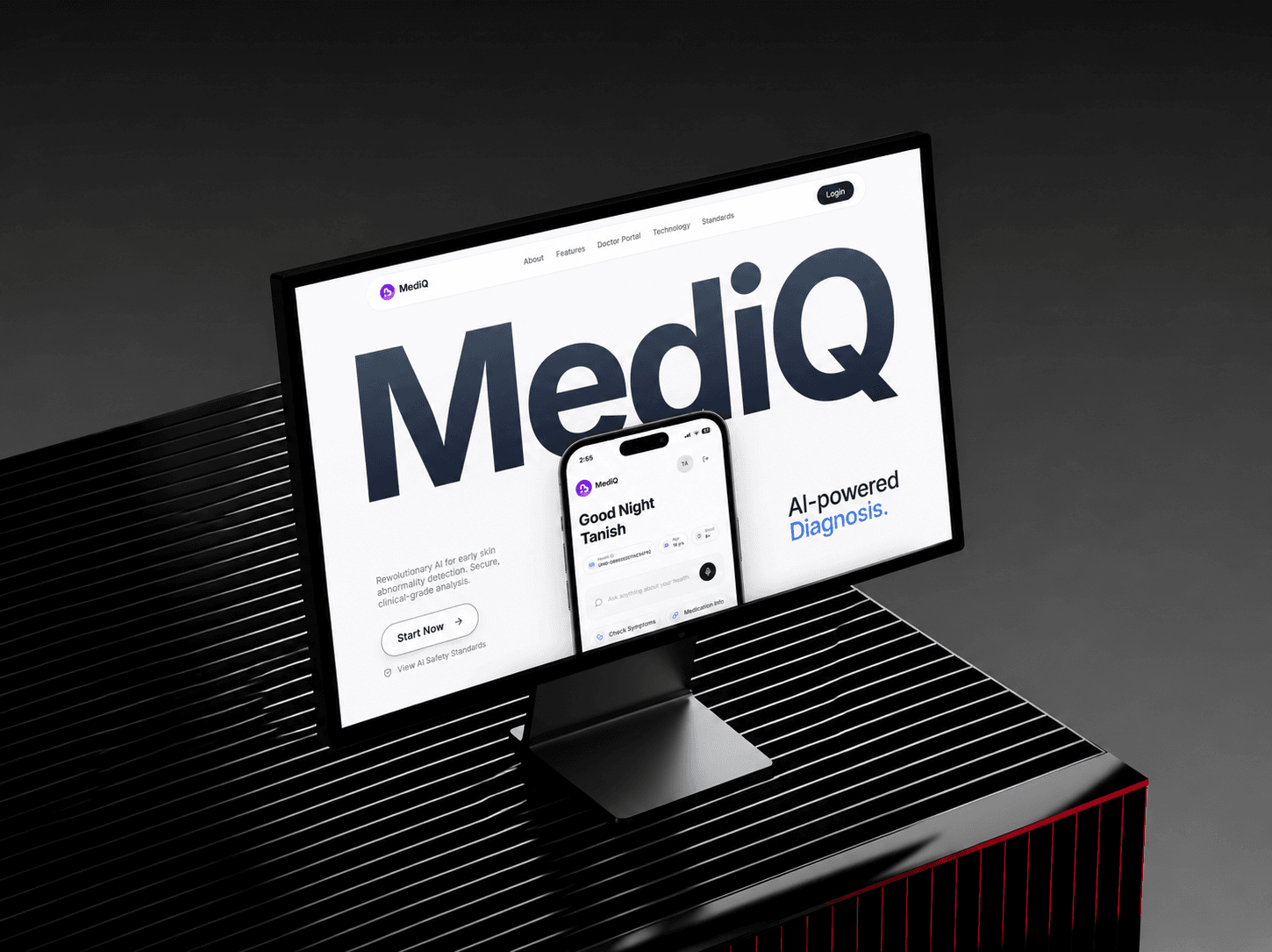
MediQ puts the whole path in one platform, with separate experiences for patients and for doctors. A patient can ask a health question, upload a skin photo or a chest X-ray for AI screening, get a report, find a hospital and book an appointment. A doctor reviews the same scan and report, and can refer the patient on to a specialist.
The screening is decision support, not a diagnosis. Every result is meant to be reviewed by a doctor.
For patients
- AI health assistant. Symptom questions and medication information, answered through retrieval-augmented generation over a Pinecone vector index.
- Image screening. Chest X-rays are screened for pneumonia and other chest conditions, and skin photos for dermatological conditions. Both models run on ONNX Runtime, and a Grad-CAM heatmap shows which part of the image the model looked at.
- Reports and history. A timeline of scans and results, with a downloadable PDF report.
- Doctors and appointments. Find a specialist, read reviews and book.
- Hospital finder. Nearby hospitals and clinics based on location.
- A health ID on every profile, plus consent and privacy controls over who can see the record.
- Three languages. English, Hindi and Marathi.
For doctors and specialists
- Dashboard for availability, appointments and schedule.
- Patient records with history, reports and earlier scans.
- Referrals. Search for a specialist, set a priority, add clinical notes and track the status. Each referral keeps an audit log of every change.
- Specialist inbox. Incoming referrals with the scan, the heatmap, the report and the referring doctor's remarks, ready to accept or decline.
Under the hood
A React and TypeScript front end built with Vite, Tailwind and shadcn/ui talks to a FastAPI backend. Data lives in MongoDB through the async Motor driver, authentication is JWT with separate roles for patients, doctors and specialists, passwords are hashed with bcrypt, and reports are generated server-side with ReportLab.